interview by Marcus Waldron
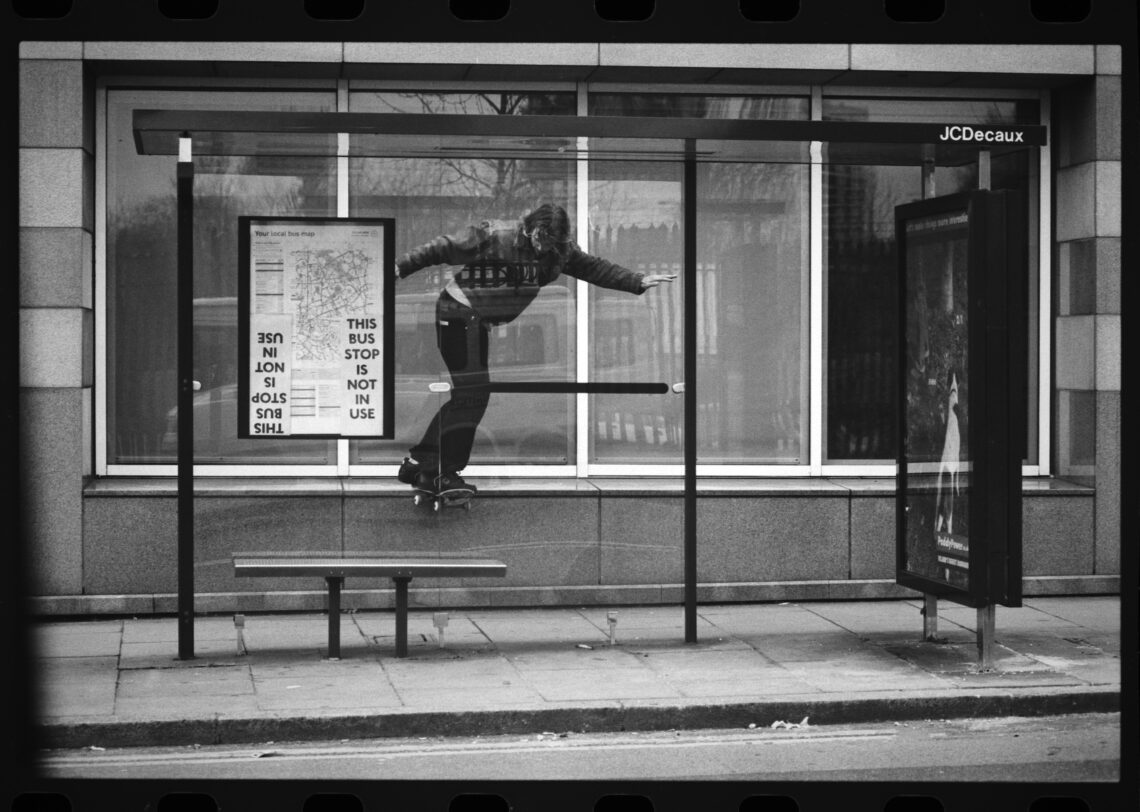
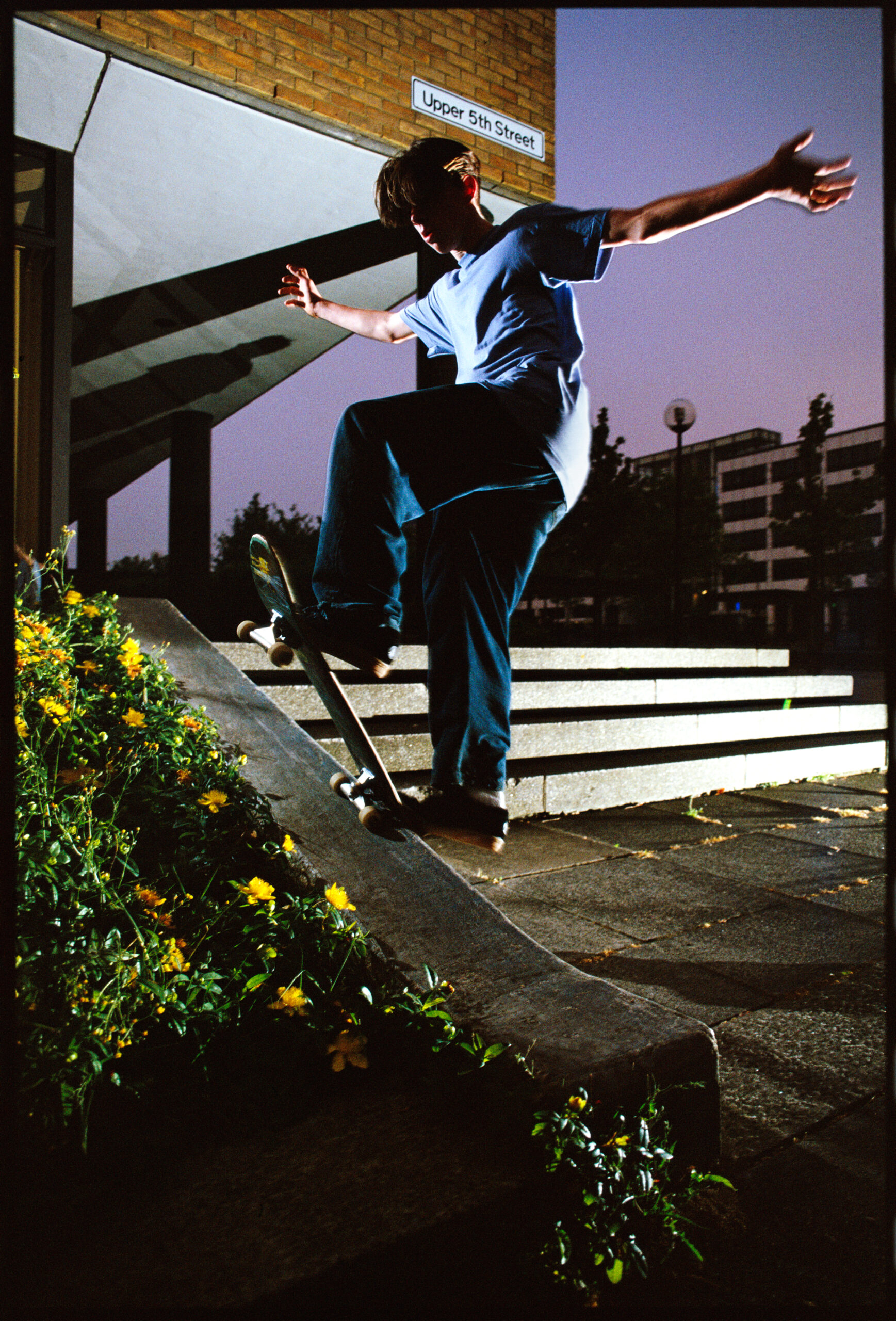
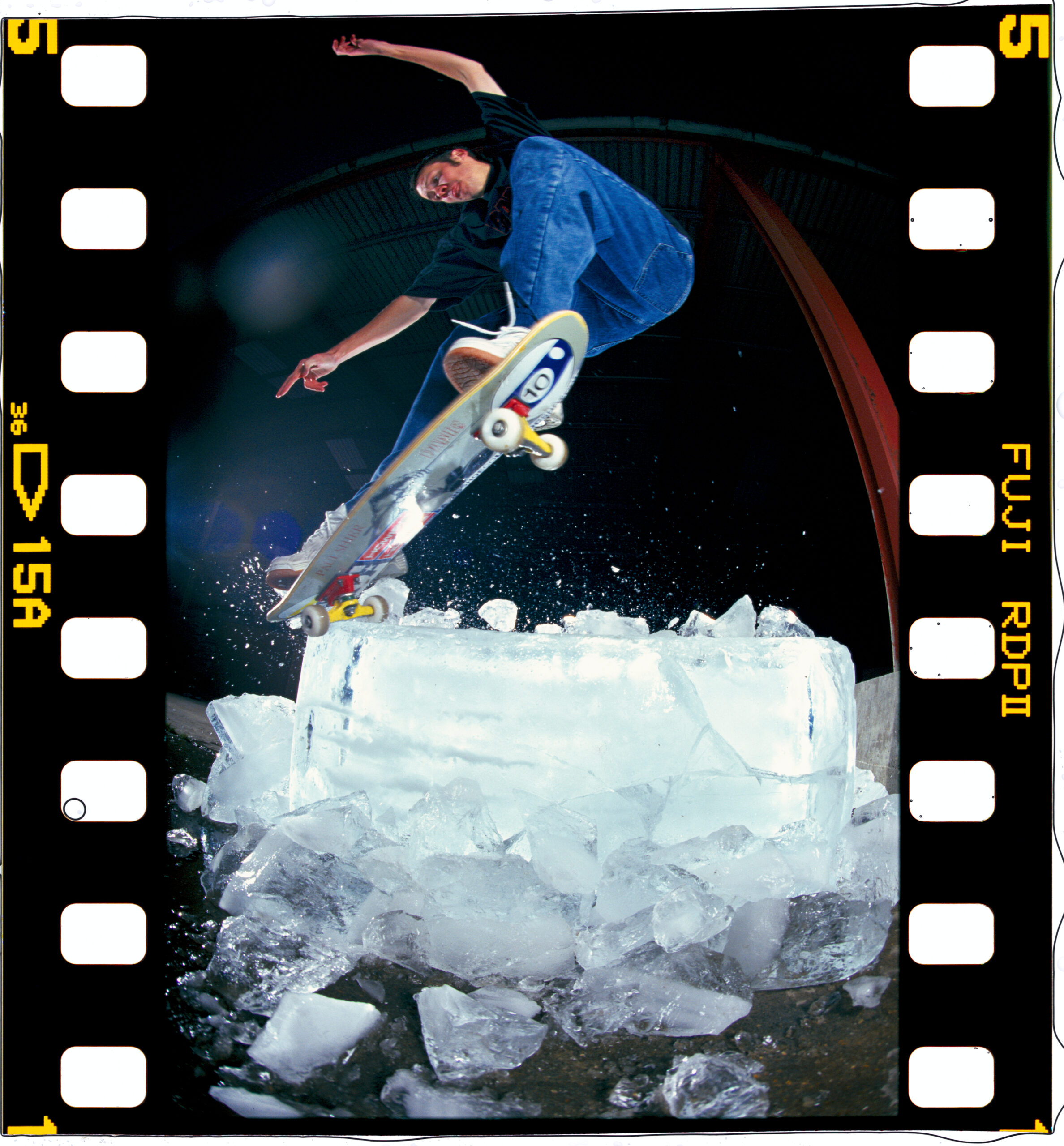
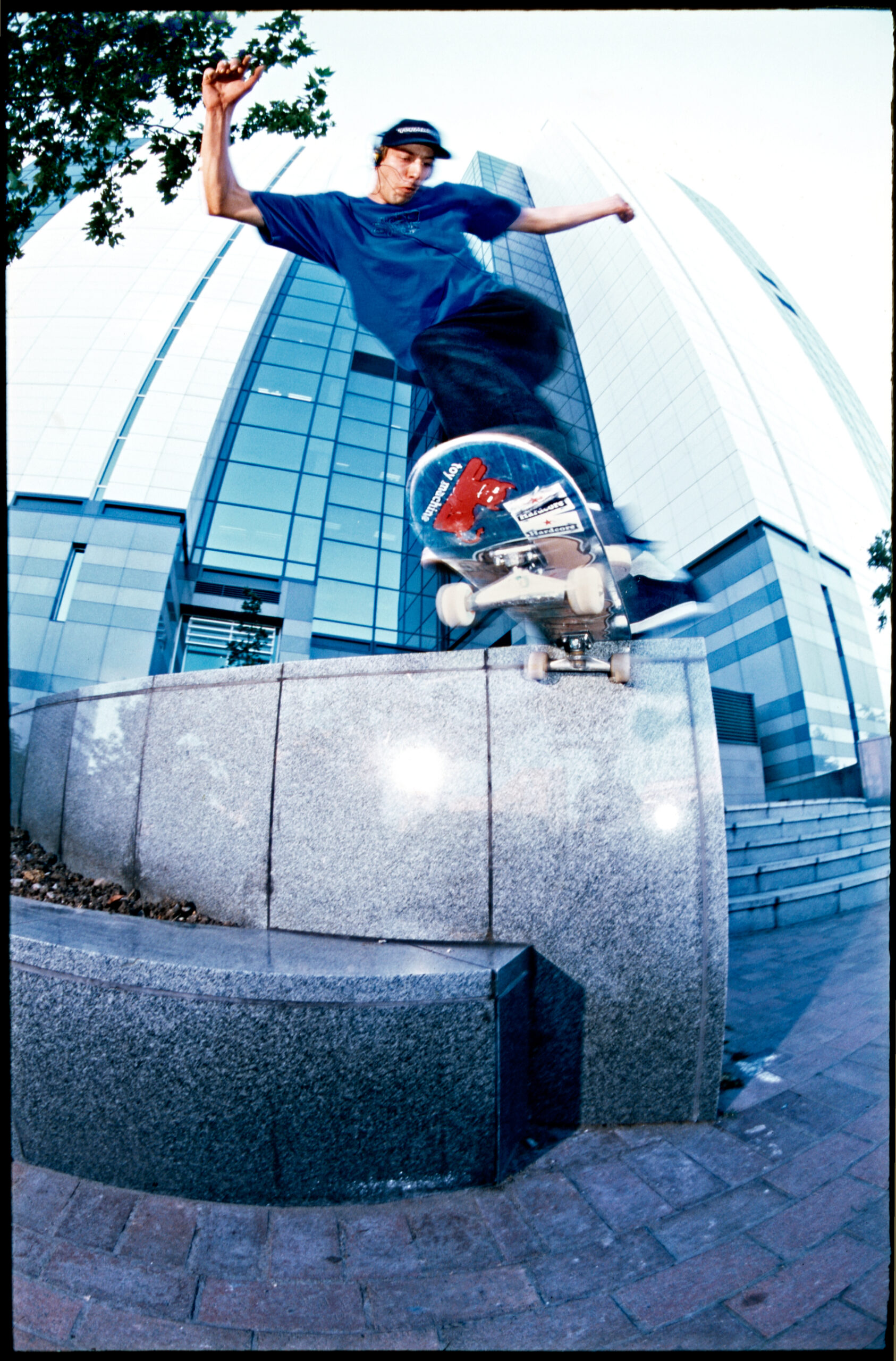
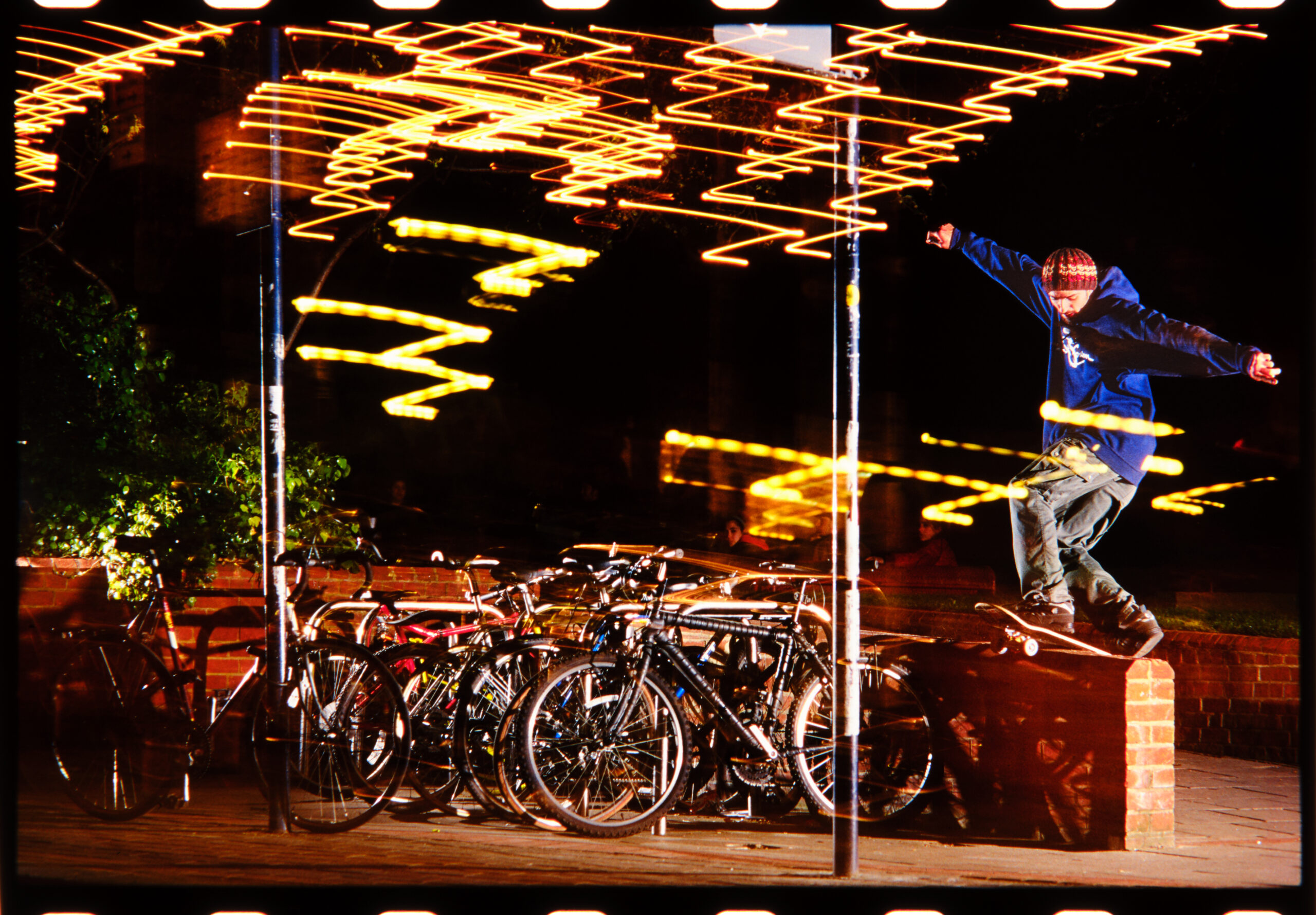
What have you been up to today? Were you working in the studio?I am a commercial photographer these days, but I work mainly in the studio now. I work quite a bit for a cycling clothing brand called Rapha Racing, who have stores all over the world including New York and London. I mostly photograph people in studios nowadays, but I still dive into the skateboard archives here and there to help people produce articles, books, and magazines whenever I can. So I’m a photographer, but I’m not a skateboard photographer full-time by any means at all.
How did you first get into photography?I was quite lucky, straight out of school I got an apprenticeship to a photographer. This was in the mid-to-late ‘80s, so some time ago now. Back then we were using view cameras to photograph things in studios, pre-Photoshop, long before the digital age had really started. So I learned photography in this quite strict environment, but there was lots of work for photographers because you needed a photographer to take a picture for you. Now, obviously, we all have brilliant cameras on our phones, but back then, you needed a photographer to take a picture for you or your business. Back then it was considered a craft and therefore a career. How things have changed!
It’s been really interesting because I’ve seen all that history of photography. I’ve seen the dawning of the digital age. Actually, the mid- 2000s was a very strange and difficult time for me. We had to go from one system of exposing film absolutely perfectly, and we knew how those images would end up looking in print, to this whole new computer based thing where we were looking at pictures on screens. The image might’ve looked absolutely fantastic on the back of the camera, and then you get it into your computer, and it looks completely different. So the very early days of digital photography were fairly confusing until we worked it out. Obviously, the entrance into photography now is so very different from when I was a teenager. I’m happy to have seen those changes. It’s really interesting to have seen all that and still be doing it, and earning a living from it.
When you were first starting off, were you into BMX before skating, or which started first for you?In the early 1980s, just after E.T. the movie, BMX really hit big in Britain. We were all into BMX as kids in the early 80s. We had a great time, but then along came skateboarding having its second wind. It just felt like a much more freeform thing. There seemed to be a lot more possibilities with skateboarding. So it was fairly quickly that I “transformed.” That was a term that we used in the 80s in Britain for kids that turned from BMX into skateboarders. We were transformers.
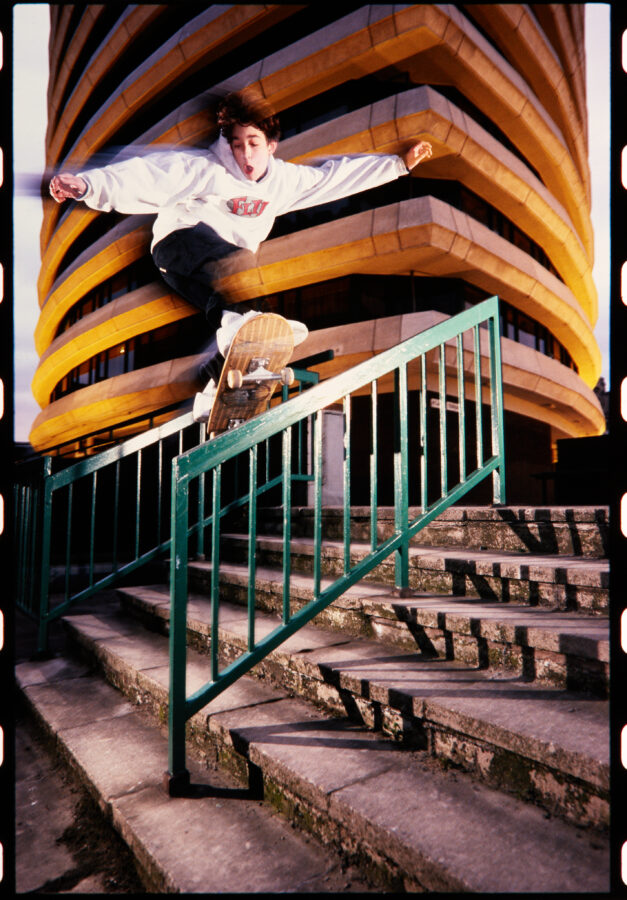
When you were doing your apprenticeship, learning photography, did you start shooting your friends and skateboarding immediately, or was it a little while before you connected the two?Oh, I think it was almost immediately. It was really quick because it’s actually what I wanted to do. I don’t think I had been particularly interested in school, but I was interested in going to the local magazine shop on my lunch hour to buy BMX Action Bike magazine. That shop also had BMX Plus! magazine and occasionally a Thrasher, but this is probably all we could get back in the ‘80s, magazine-wise. There was this brilliant crossover magazine called Freestylin’ that had skateboarding and BMX in it at the time. It was a really brilliant snapshot of a moment in time and history where the BMX thing was fading away and skateboarding was coming back. Spike Jonze was working forFreestylin’ alongside Windy Osborn, daughter of BMX photographer Bob Osborn, and they started putting skateboarding in the mag as well. A brilliant crossover title. Nobody talks about that magazine anymore, but of course, Spike Jonze went on to do Club Homeboy – with Andy Jenkins and Mark Lewman – and we all know where he went after that. Those magazines were a jumping-off point for so many influential people to learn their trade.
When you were starting off, did you quickly aspire to work for a magazine? Was that something you set out to do?Yeah, absolutely, through my skateboard friendship group and eventually finding Transworld Skateboarding Magazine, in the late ‘80s, and seeing the work of Grant Brittain. Transworld wasn’t so available back then, so we had to travel to London to get a copy. It was a little bit harder to come by, but when I saw the work of Grant Brittain, who wouldn’t be inspired by that? As a lad from the middle of nowhere, seeing those incredibly exciting images was brilliant.
You’re born and raised in England, and you continue to live out there and work there, but you lived in California for a brief period. Can you tell me about that?I met Grant and Dave Swift in Germany at one of those European skate competition things. It was called the Münster Monster Mastership, and I just immediately got on with them. Maybe it was me falling, slightly drunkenly, into a fountain that they might’ve found incredibly endearing and fun, I don’t know. So we immediately got on and it was all good. I was really into black and white printing back then, it’s what I really loved doing back in the late ‘80s. I was, though I say it myself, quite good at black and white printing. So they saw these black and white prints I was making in the UK, and that’s what they wanted more of. When I met them in Germany, they were like “Why don’t you come out to California and you can work in the Transworld darkroom?” So I thought, OK, that’s quite exciting. Yes, why don’t I do that? I think we’re probably talking about 1993-ish now. So I made it out I think a year later in 1994. I did a little while in the darkroom, creating prints many of which were used in the magazine. I obviously printed my own work, but I printed all the other Transworld photographers’ work as well. It was a great time. It was good fun. But I wasn’t exactly thrilled by where Transworld was situated. I was also very naive in that I didn’t really understand quite how big California was. I had a very good friend who lived in San Diego so I went to stay with him and I thought if Transworld was inside San Diego County, how far could that be?! Quite quickly I learnt that in California you have to drive literally everywhere and I didn’t like it. I’m not that sort of a person. Eventually Grant and Dave sent me up to San Francisco with some Transworld per diem money, and I was much happier up there. You’ve got trolleybuses and the BART so you can get around the city easily. So I quite quickly realized that I wasn’t going to be able to stay in Southern California.
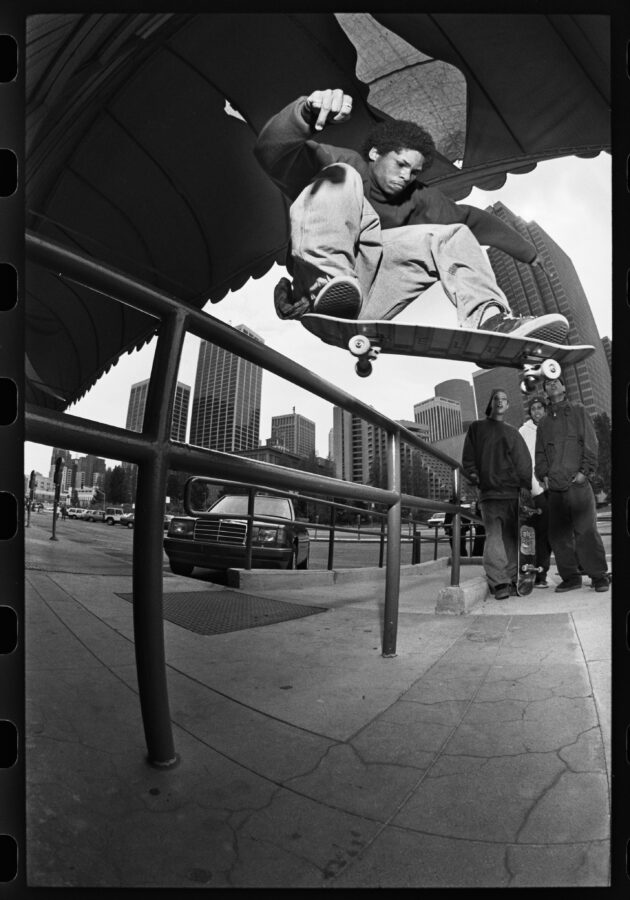
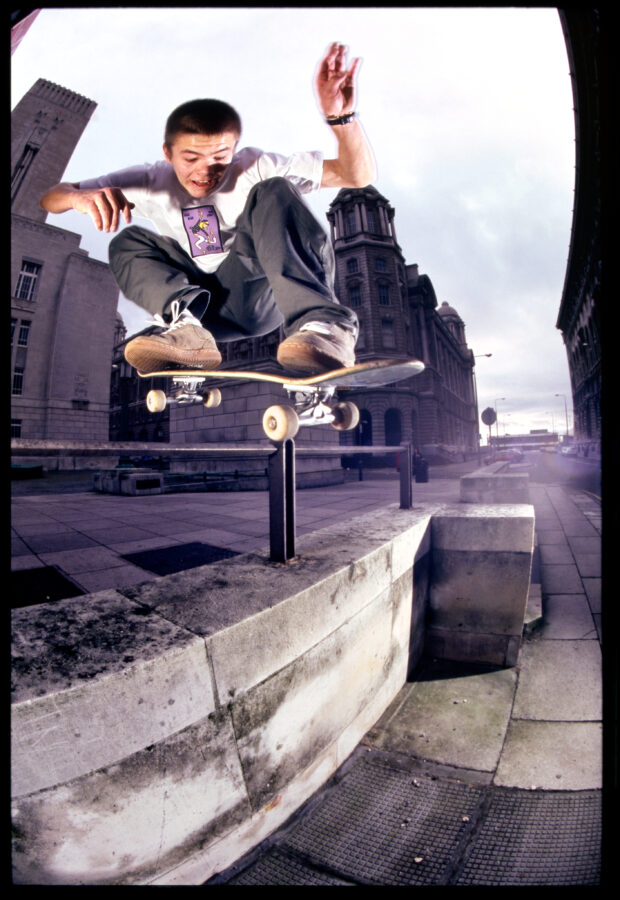
Prior to meeting them and moving out there for that job, had you ever romanticized going to California for the skate life?Oh, of course, we all had, for sure. I was deep in that whole looking through Transworld and seeing pictures of EMB and being incredibly impressed. “Oh my God, look at this Mecca for skateboarding!” I felt overjoyed that I’d been invited to go there. But when I did finally get there, it was, to be frank, a bit of a letdown because Southern California, I didn’t like at all. I thought that San Francisco was, back then, an absolutely incredible place, wonderful. I hear it’s very different now, but I haven’t been recently, so I wouldn’t know.
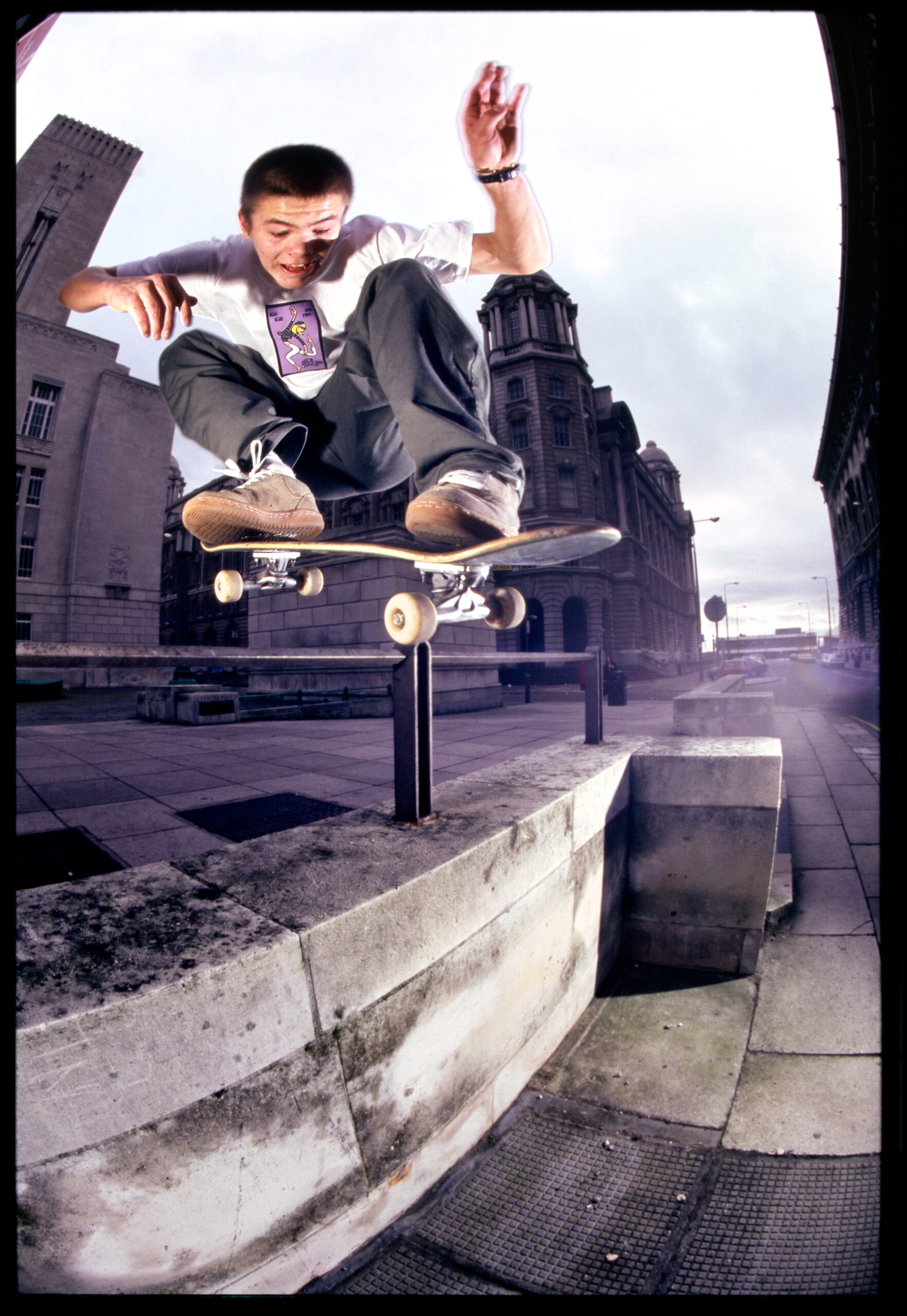
Growing up, how was the skate scene in England, and did it feel different than other places?I think the skate scene in Britain is very different, and one of the primary reasons it’s different is because of the weather. There’s a determination in Britain to go out and skate while it’s not raining, I mean, you could say the same in San Francisco, it’s quite rainy up there, isn’t it? And it’s definitely true of the East Coast. I think there’s that sort of feeling of, we need to do this, we need to do it now. We can’t come back tomorrow. I thought that the California scene was a bit insane. Driving two hours to a spot and then driving two hours home felt really odd. As a New Yorker you understand this? Everywhere is a skate spot in your city. It’s true of LA as well, I don’t want it to be too unfair. There’s loads of spots in Downtown LA that you can skate around to, but correct me if I’m wrong, in NYC you can step on your board outside your front door and you can skate to quite a few skate spots? That’s definitely the way it is in London. It’s definitely the way that it is in Liverpool, and in Manchester and in Leeds. So to me it just felt a bit more real. And that’s what I wanted to communicate to the world somehow, that our skate scene here was important. So that’s why I came back to the UK.
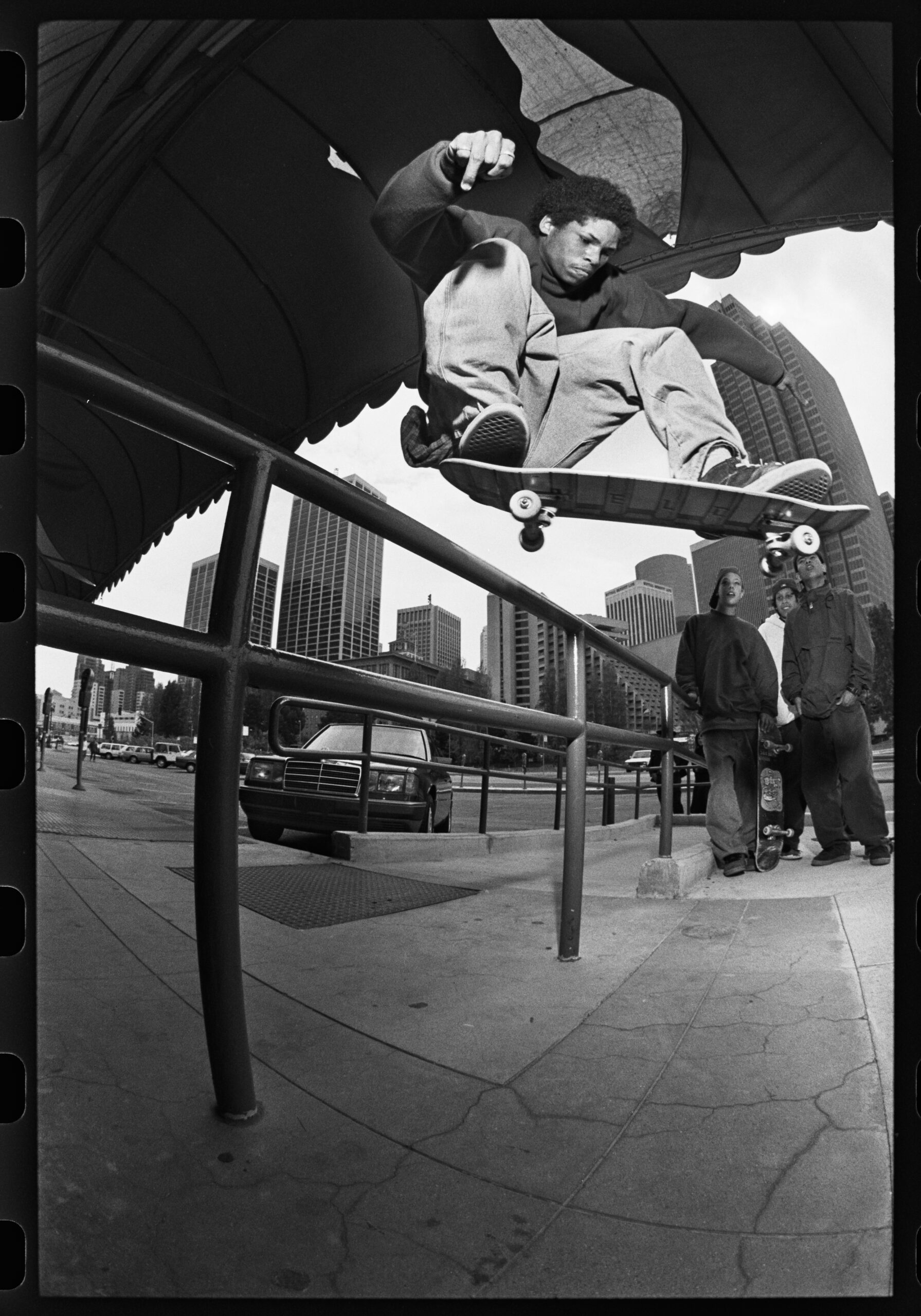
When you were working for skate magazines you were shooting a lot of demos, right?There was a lot of skateboarding happening inside warehouses in the UK for sure. I worked for a magazine called Sidewalk Surfer; I was a full time employee from 1995 or something like that. It was my entire life at the time. The UK distributors of various companies would set up demos to bring over their American pros to be able to sell their product. I was happy going out photographing street skating with British people, but yeah, demos were quite a big deal at one point. It probably felt to the distributors that it was the only way they were going to get their US names, their US pros into the magazine, because of this demo thing. And I’ve got no problem with it at all. There was some fantastic skateboarding going on because of those demos.
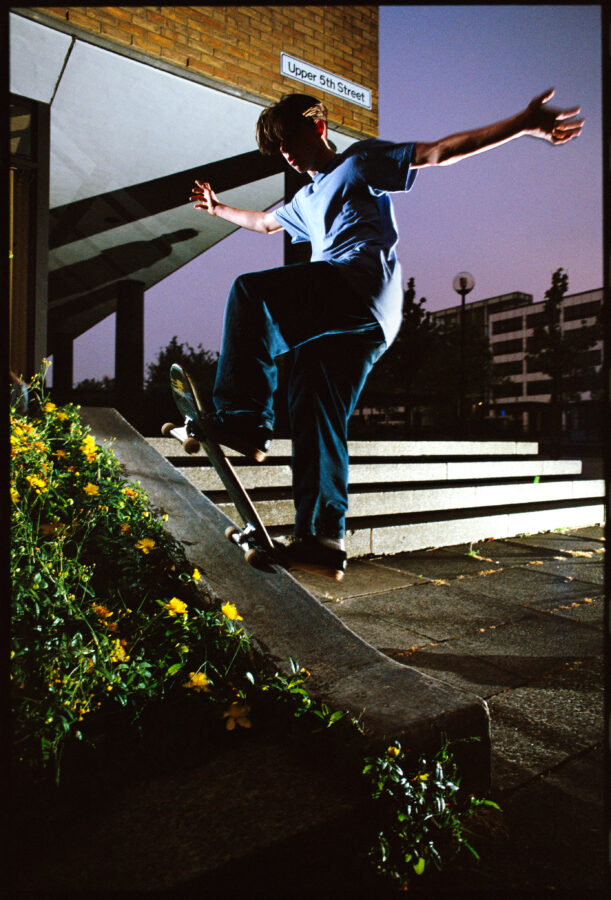
Aside from contests and demos, I imagine most of your work was shooting in the streets, either going around locally or on trips. What was that balance like? Was it a lot of trips back then, or were you more so at home, going out when you wanted?A bit of both really. From ‘95 to 2000-ish, I lived in Oxford, so I would be traveling out, driving across the UK to photograph people, and that was one way that we would collect material. I’d be driving all over the country to various cities, Manchester, Leeds, Liverpool, and also I’d be driving to London to collect various skateboarders and shoot with them. Then I moved to London in 2000, and I was probably out even more in the streets. But there were trips. It’s always a good way of gathering people together and making sure that they actually do skate. A few people, if you just say, “Oh, I’ll meet you there and we’ll do this”, they might not be motivated to do it. Trips are a way of gathering people up and motivating the group to get something done, so they’re useful. There weren’t a huge amount of them back then. I don’t think the industry had lots of money for that, but occasionally the big shoe companies would send us out on trips.
How big were some of those demos or contests back then? Do you remember any really big ones you shot? Some of them look like pretty large audiences.Those European contests were really the only place where you could go and see and connect with your skateboard heroes. So people would come from all over Europe to go to a Radlands contest in Northampton or a Münster contest. I mean, they had what seemed like huge audiences. I haven’t been to the modern equivalent and I don’t know whether putting skateboarding in a big arena is necessarily a good idea. There were some big events back then but I always wondered whether actually putting it in a stadium was a particularly good plan because it could just make it look small. There was a skate contest that was at the Millennium Dome in the early 2000s and it looked ridiculous, even though they had a full size vert ramp in there the Millennium Dome is this huge, huge, space and it dwarfed everything. It just looked ridiculous. We had Generation ‘97 in Wembley Arena in 1997, which I do have pictures of. That sort of worked, but again, there were quite a few empty seats, and I don’t know whether it looks particularly good if the stadium isn’t full.
What about these days, are you still in the dark room ever or not much?Not so much, no. I did a little bit of black and white printing at the end of last year as part of a talk that Neil Macdonald (@scienceversuslife) and I were doing about our archives. I really enjoy black and white printing but it is incredibly slow going, so the productivity aspect of it is really not great. But it’s still fun having the red light on, and trying to do the things that you need to do to your light sensitive piece of paper in the dark. I’ve never done any color printing. I skipped that class at college.
So for Sidewalk, or any of these magazines, were you only doing photography, or did you help with any other aspects of the magazine? Were you doing any layout or interviews, or anything, or strictly shooting?I was the de facto photo editor of Sidewalk, but I was out shooting so much that I quite often would not go into the office for days and days. So I wasn’t completely in control of what was going where, and what was going on the cover, and all that kind of stuff. Even though it said in the magazine that I was the photo editor, I wasn’t really. The thing I made it my mission to do, mainly because I felt like I was overworked at the magazine, is to encourage other photographers to step up and give us more material that we could publish as I didn’t feel like I could be everywhere all at once. So, to name drop a few names, I definitely encouraged Leo Sharp and he helped enormously at Sidewalk. Sam Ashley was always going to be a fantastically talented photographer anyway, but I’ll hold my hand up and say I might’ve helped him a bit. The person you’re most likely to have heard of over there in the U.S. is Oliver Barton of course, who has had a great career in skate photography. He’s lived in LA for many years now and whenever I turn up in LA, he takes me out for breakfast. So shoutout to Ollie, and to Sam, and Leo.
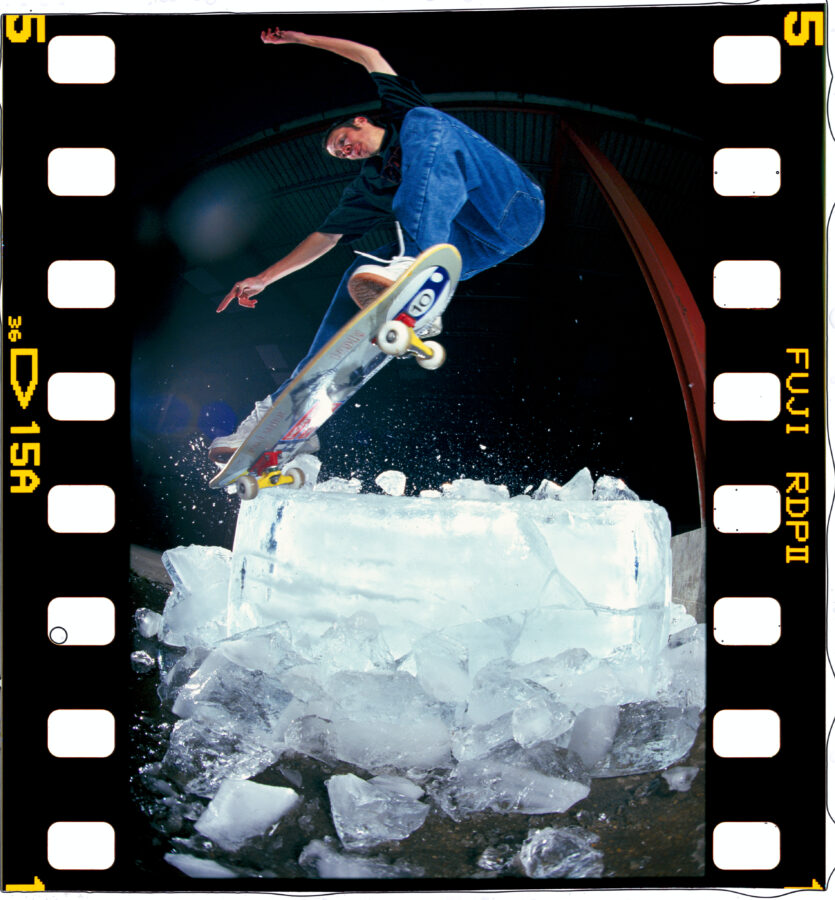
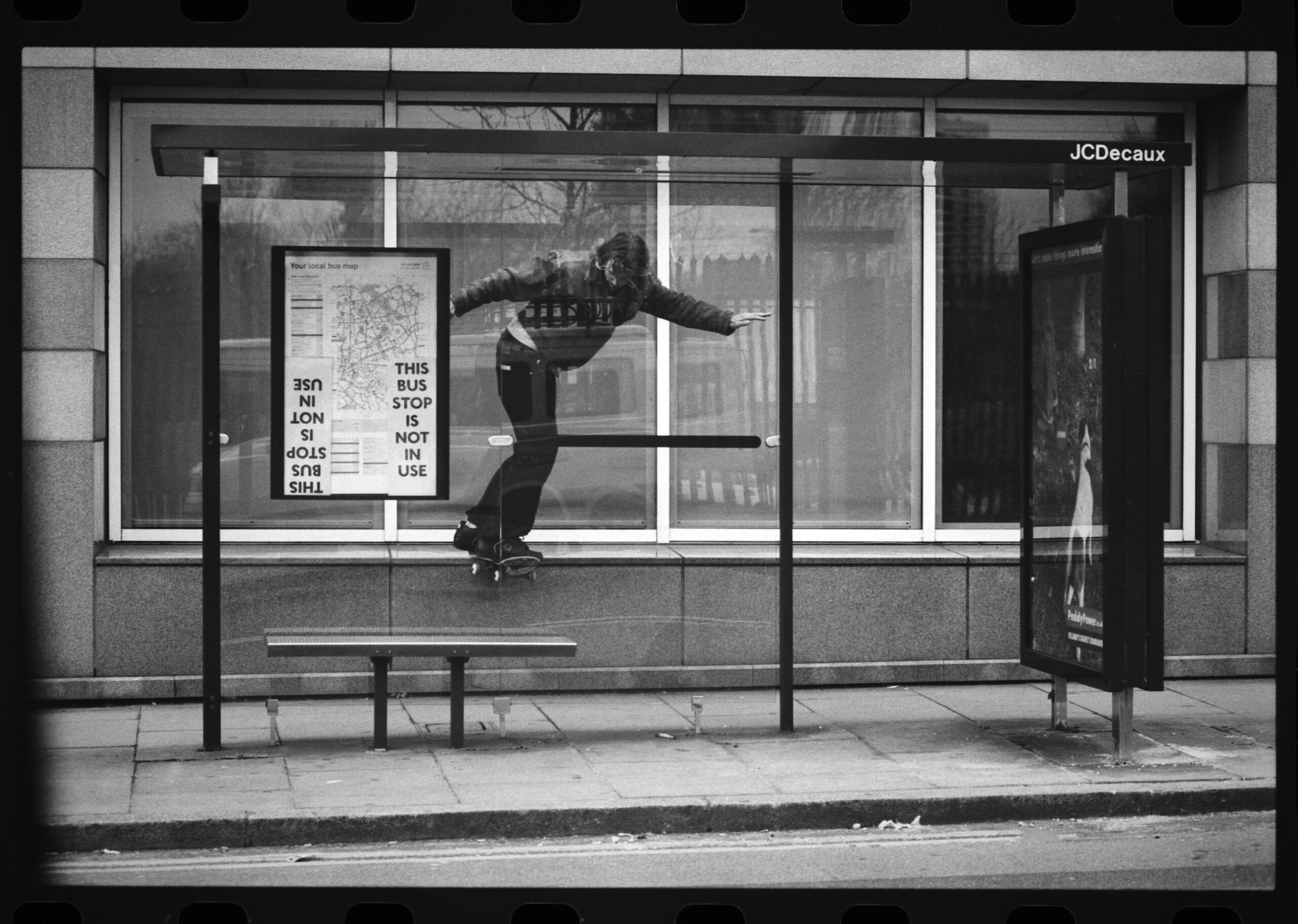
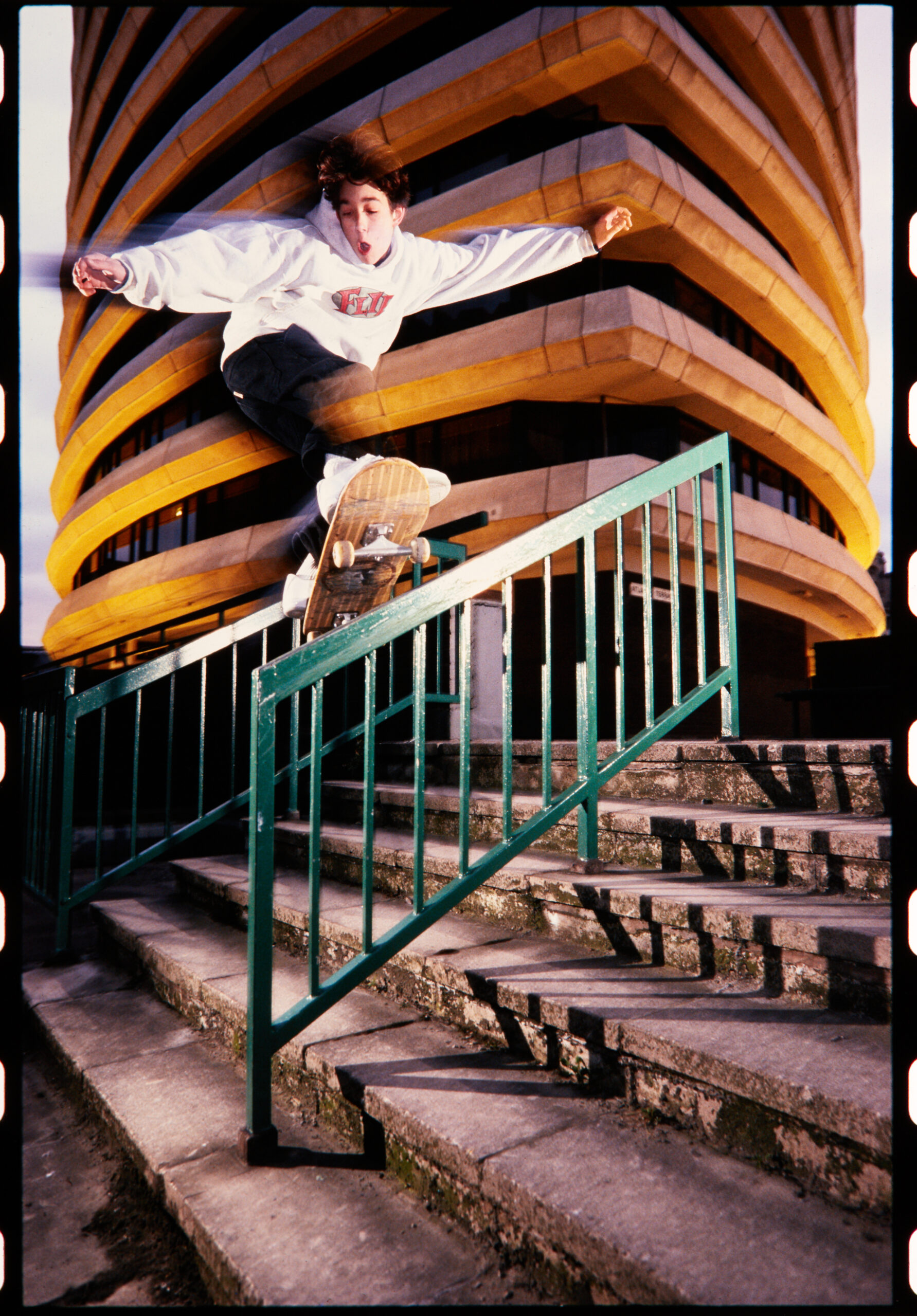
What is your more commercial work like now? Do you feel like working with skating and magazines has helped you?I think I learned a lot about how to relate to people generally through the people I met in skateboarding, and photographing skateboarders specifically. These days my job is basically meeting new people and photographing them in a studio. This is something I would have been terrified of when I was at school, but it’s now something I actually love. Also, I think it was really great working for a magazine that had a deadline and you’ve got to be able to produce this much material to fill this many pages by this time. Sidewalk wasn’t monthly to begin with, but after we had some practice, it became monthly. Monthly magazines take discipline to produce. The magazine’s got to go out on time or the newsstands won’t stock it. So that’s a really good skill. Achieving a deadline and being reliable is as important today in our new “content creation” world.What do you think is the role of photographs in skateboarding today, with everybody having video cameras and photo cameras in their pockets? What role do skate photos play now that there’s so much skate media out there?I think that a still photograph has such magic in it. Because you are left to imagine what’s happened before and what’s going to happen just after the moment that is captured. For me, using your imagination is always going to be better than any video. I really think that still photography is important because it can do that. A picture of Tom Penny, say, exists forever, that single image. I’m sure that we could watch Tom on video and we’d be like, “Oh yeah, Tom Penny doing a frontside flip on a mini ramp, yeah that is brilliant!” But the still photograph has huge power and leaves us to believe whatever we like about something.
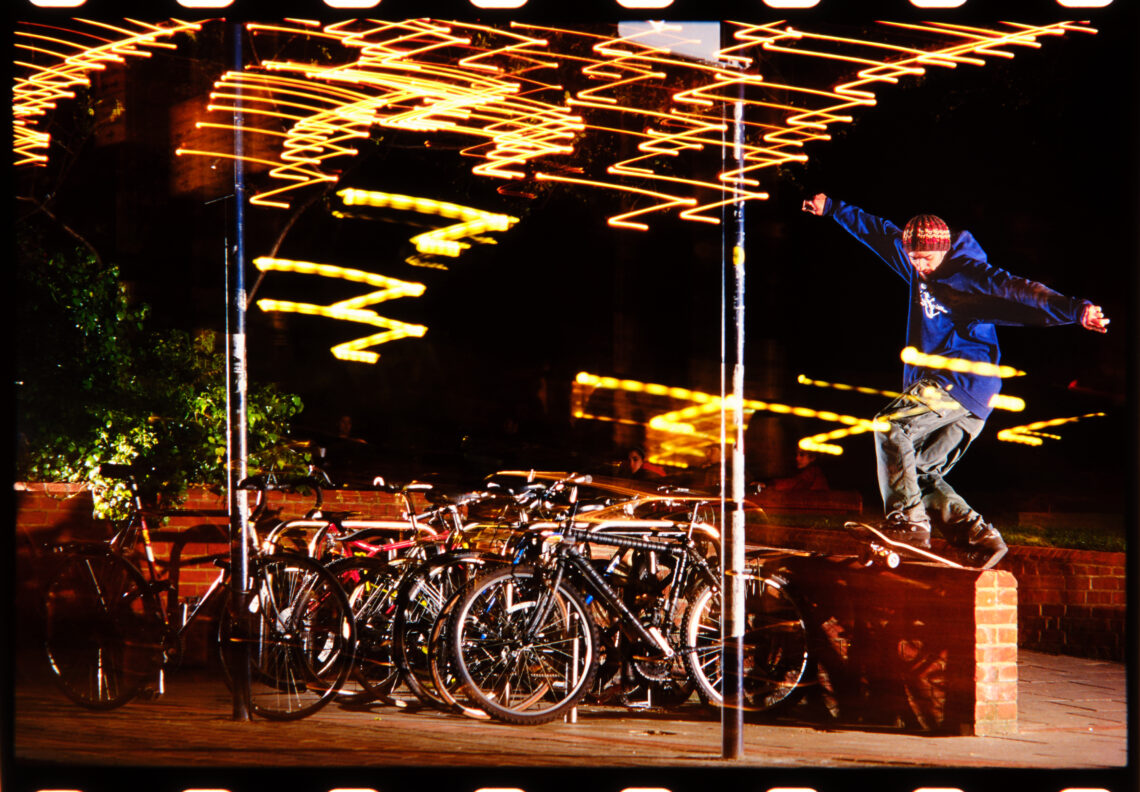
You had mentioned the gear back in the day, did you ever get to a point when you felt like “This is too much”? Did you ever come to a point when you scaled back how much you would bring out?Yeah, I remember this vividly. I remember being in Barcelona, it was when Barcelona was drawing everybody in. It was like the street skate city where people were visiting from all over the world. It was the early 2000s, and internationally famous photographers would converge in the city with various pro skateboarders with them. We’d all run into each other at the spots at the time and I was watching… I won’t name the photographer or the skateboarder, but I’d looked at this studio setup in the street – something which I pioneered really, the studio set up in the street – but I just thought that what they are doing has completely changed the dynamic in the street. They had police tape to keep people away and I thought this was complete madness. It’s no longer skateboarding taking its part in street life and being part of it. This activity is now trying to dominate the street scene. I might be going against the grain here but in more recent times when I photograph skateboarding, I just turn up with the smallest camera I possibly can, and the smallest light I possibly can. I don’t want to be the center of attention. I want this thing, this scene, whatever this is, to unfold around me.
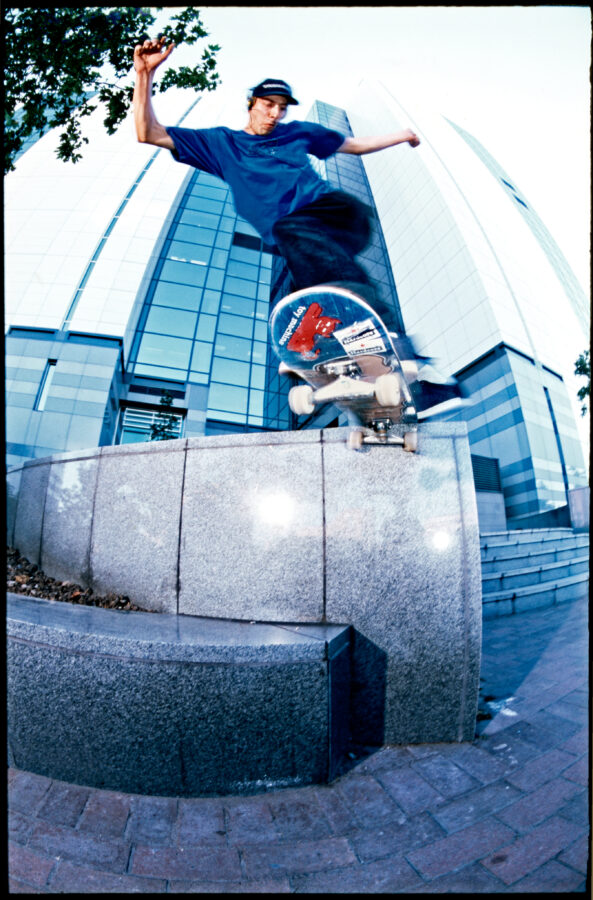
Do you have any projects or shows coming up?I think 2026 will be all about Neil Macdonald’s upcoming book Elsewhere. We’ve definitely got a date for a launch in London for May 14th and one for Leeds on the 28th of May. That will be a big thing. We’re hoping to do some other regional launches as well, because obviously those regional cities are a huge part of the story. So we’ll definitely do a launch event in Liverpool, and other cities as well. This has been an enormous project for Neil, so we’ll go get out there and hopefully meet some of the audience. The book has got a lot of my work in it, probably over a hundred of my photographs. So I will be talking about that project as much as I can.
Any advice you would give to somebody coming up who wants to work in photography?Photography is a very, very different world than when I first learned about it in the 1980s. But one thing I would say is, it isn’t about esoteric, out of reach equipment anymore, at all. I mean, it probably never was, but these days you can photograph people on anything you want to photograph them on. Don’t be fooled by the photography industry telling you that you need to do things this way or that way, and you need this bit of kit or particular process, and whatever else. Don’t listen to that. Do it your way. Do it with whatever you’ve got lying around you. Don’t be fooled by the photography industry telling you you’re not good enough, just keep going and you’ll get there.