words by Andrew Moignard
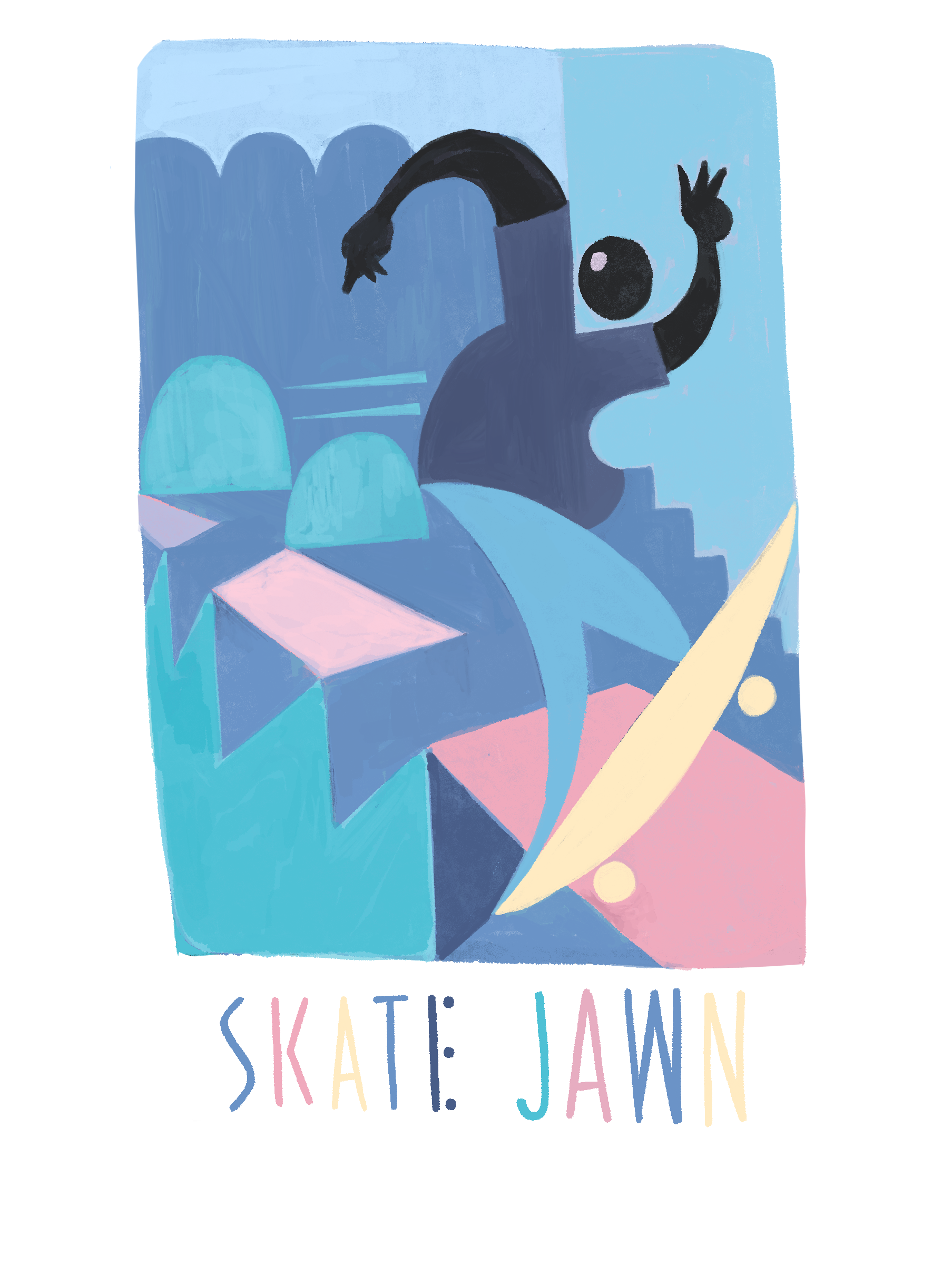
illustration by Joe Scordo
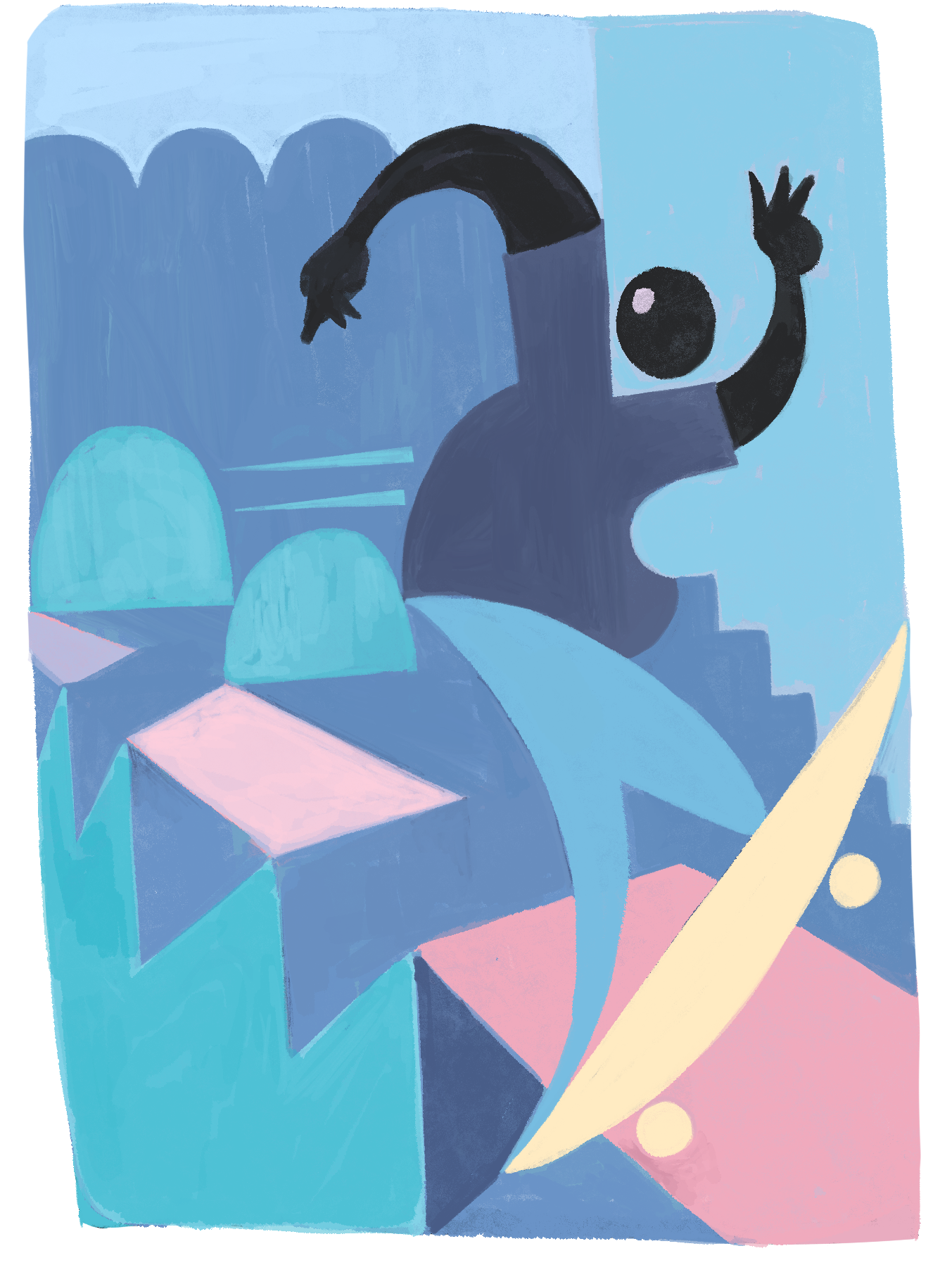
Music genres like rock, metal, punk, hip hop, and others share much in common with skating, but lest we forget jazz. No, it is rooted in a similar drive to go into the unpredictable, to be open, master a craft, improvise, and create. As jazz gets a bad rep as being “elevator music”, skaters get stereotyped, too. Yes, jazz is played at high brow galas – your Street League contests, perhaps. But, for the layman, jazz is played on the street, in the park, and anywhere in between where you could Take Five and push around. Put on some Dave Brubeck and let’s dive in, starting with some of the main elements of jazz.
Jazz is the epitome of improvisation with its sudden complex solos with dissonant notes, unsuspecting rests, and chord changes. You get notes which feel out of place followed by another series that makes them fit perfectly. It almost sounds like the music couldn’t be repeated if tried. Skating isn’t much different – doing unusual tricks that only work for that spot. Or, say, you land a trick, and continue with a line off the top of your head. During call and response, different instruments go back and forth, forming a conversation making for an epic moment. This is much like getting back to back, sparking a train on the spot. There’s almost nothing like it, except in jazz.
In swing jazz, the unique percussive sound of cymbals is timeless and original. Skateboards make distinct sounds which make us turn our heads. Our ears are strangely massaged by sounds of screeching wheels and trucks on pool coping. We basically scat sing with our strange vocabulary and hoots of hype. Jazz artists harmonize with their complex coordination of instruments just as skaters with diverse tastes in tricks, styles, and spots compliment one another. Skateboarding of course has its blue notes, too. Every video has that slam we remember, and we’ve all had our fair share, too. Jazz has a way of intentionally being offbeat with its syncopated rhythm, adding multiple layers to tempo, much like tech skaters doing calculus on ledges and manny pads.
Jazz has soul, like skating. We don’t always need to film the clip. Skaters and jazz musicians don’t move in straight lines, and our tempo isn’t always consistent, either. Your skate crew could be a trio, quartet, quintet, or a big band full of homies who make the session just so. Even though jazz has some excellent vocals sometimes, mostly, jazz is primarily instrumental. When we skate, the inner voice has to quiet so you can be present. Like a muted trumpet note, we’re slightly odd, but mostly misunderstood. Skating and jazz are similar enough as they rhythmically move you to new highs and lows through feeling and sound, only through a different vibration.