words by Cole Nowicki
photos by Carter Spinks
skating by River Tavis
The jigsaw puzzle is an image made whole in an infinite number of ways. Piece by piece, until suddenly, it’s there. Skateboarding, in its own way, is similar. Well, maybe it’s more of a Magic Eye puzzle. Stare at some piece of the built environment long enough until fragments of your lived experience and creative imagination come together and something appears — an angle, an option.
Those angles are found in the archetypes that the skateboarder works with and pulls from. Common obstacles like ledges, rails, stairs, embankments, manual pads, and so on. They can exist in any combination, like a Slurpee cup filled to the brim with sickly sweet flavour. However, individually, there are only so many ways to skate, or interpret, these fixtures of the urban environment.
If we attempt to categorize those interpretations in the sense of the physical action one performs on them, they appear as follows: riding on top of, on the edge of, up, or over. Obstacles can fall into one or two of those categories — say, the manual pad whose edges slide or a handrail that can be grinded down and jumped over — but more than that becomes rare. However, there is one obstacle archetype, perhaps the most common of them all, though it rarely gets its due, that can fulfill all categorical interpretations.
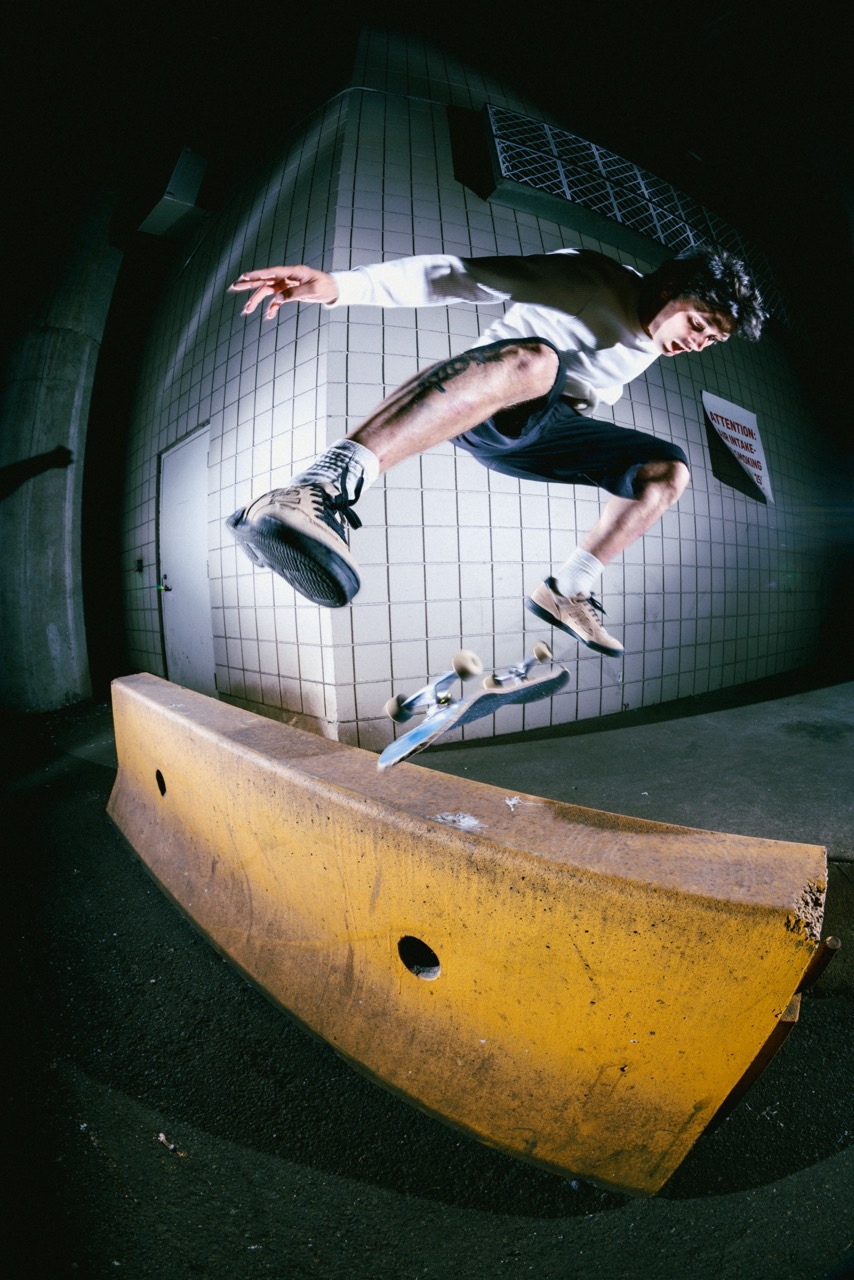
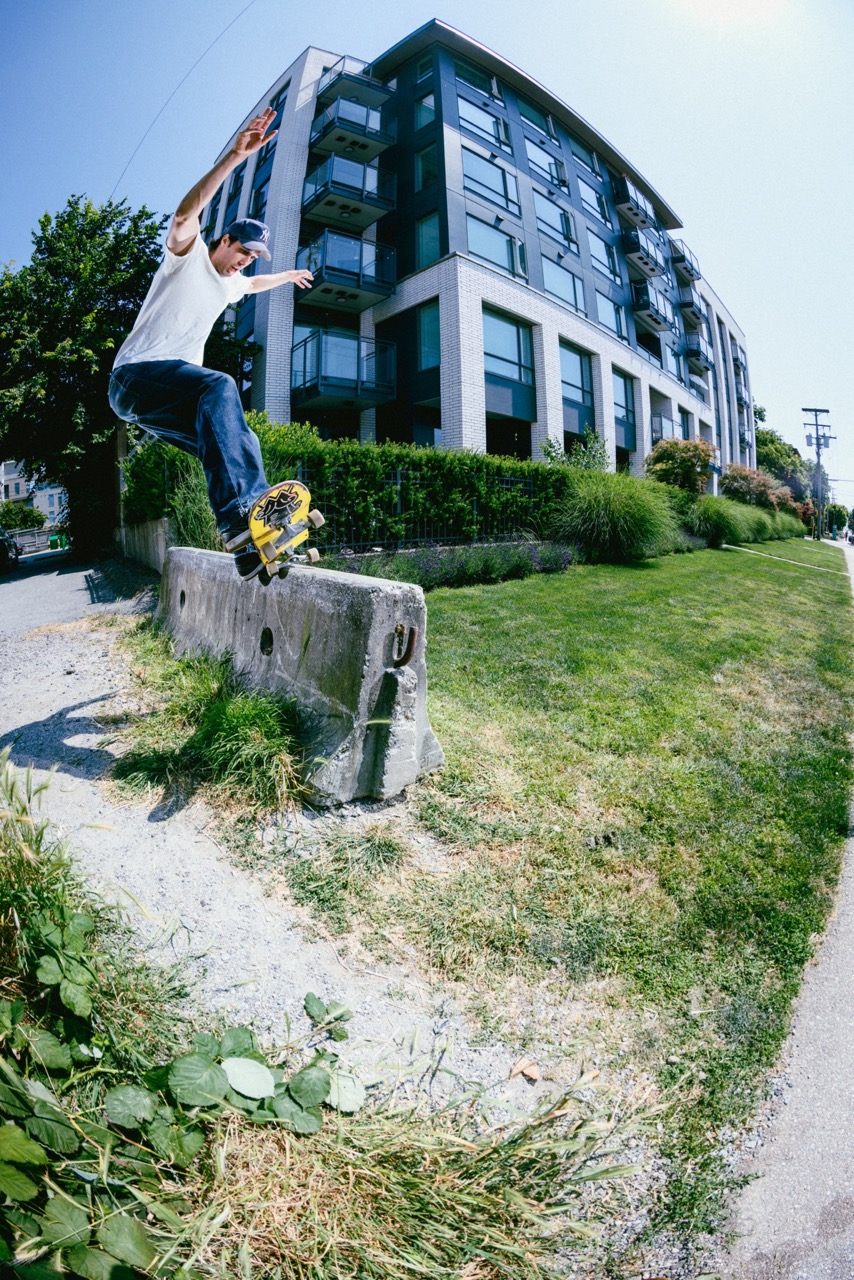
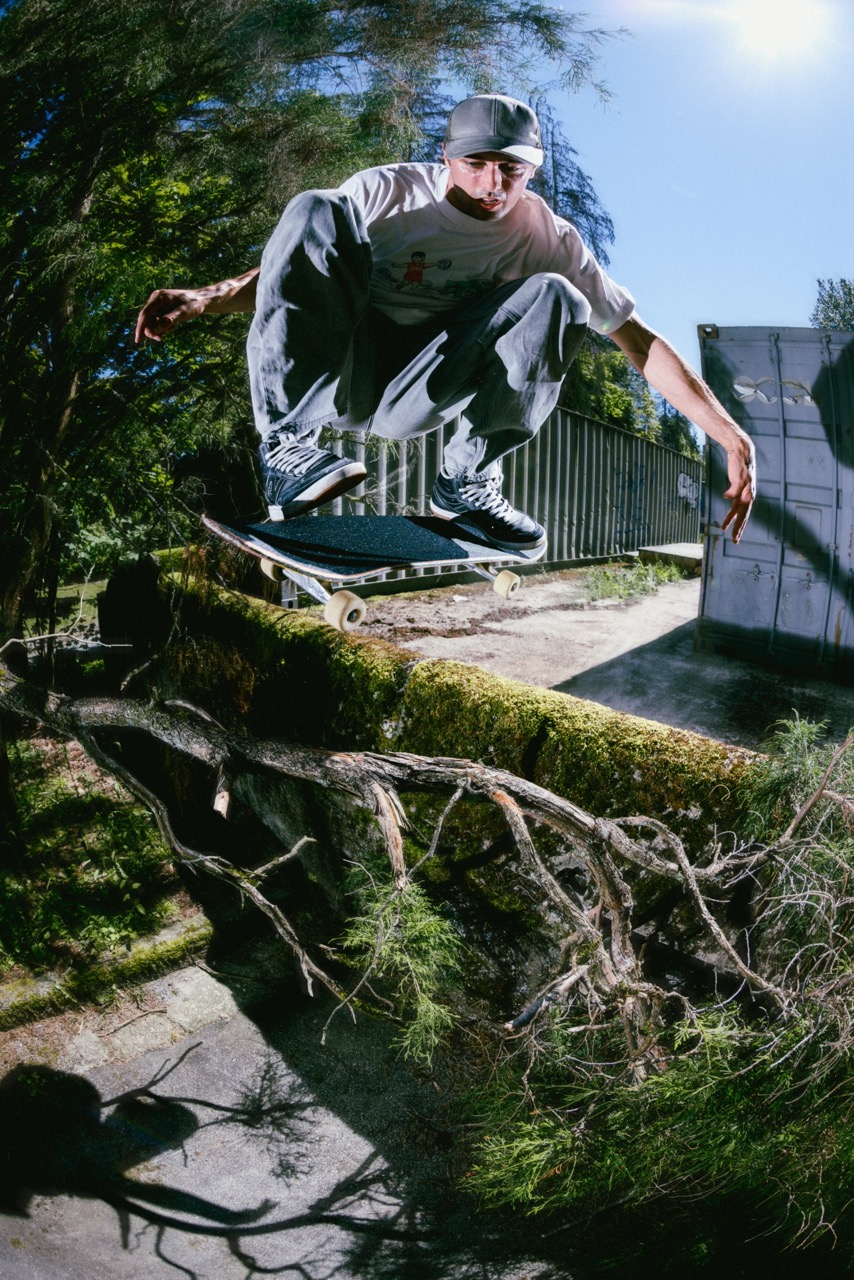
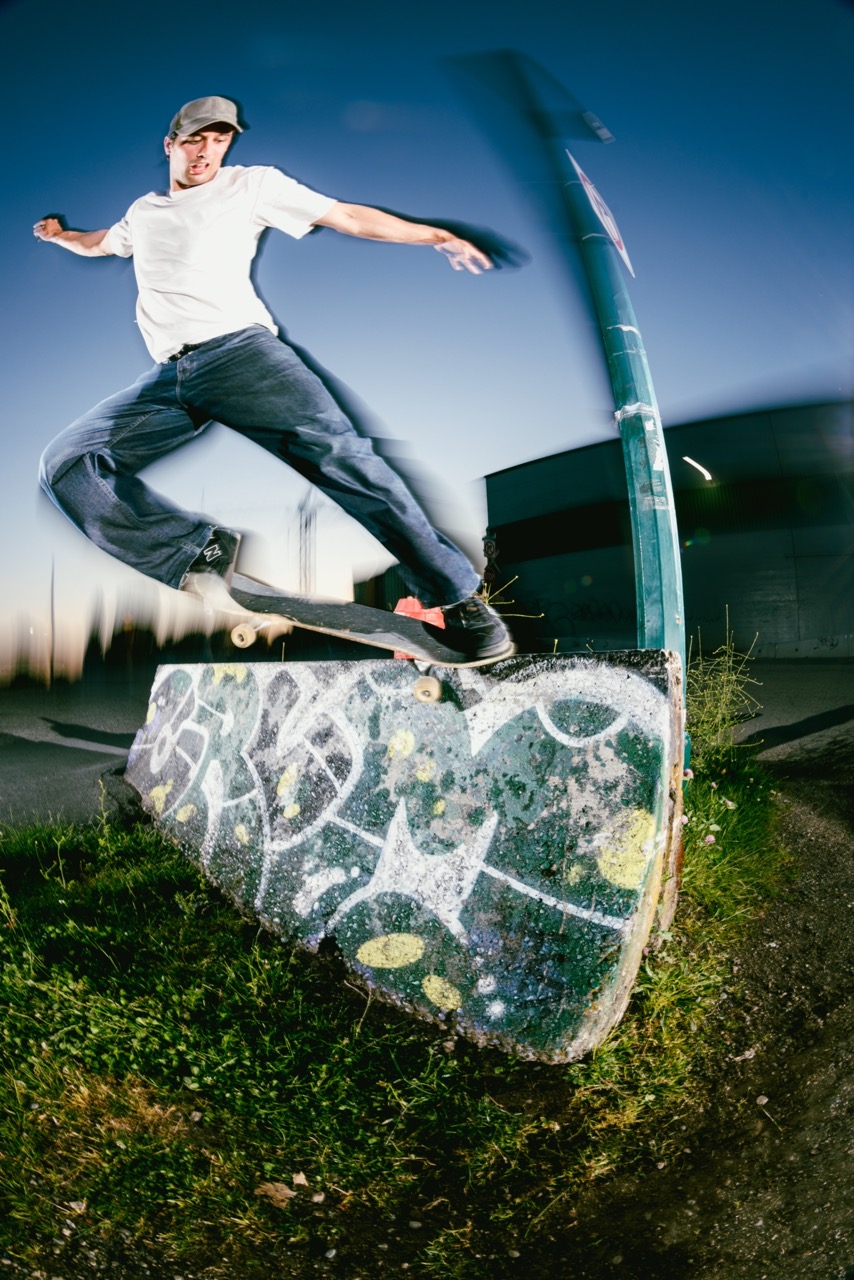
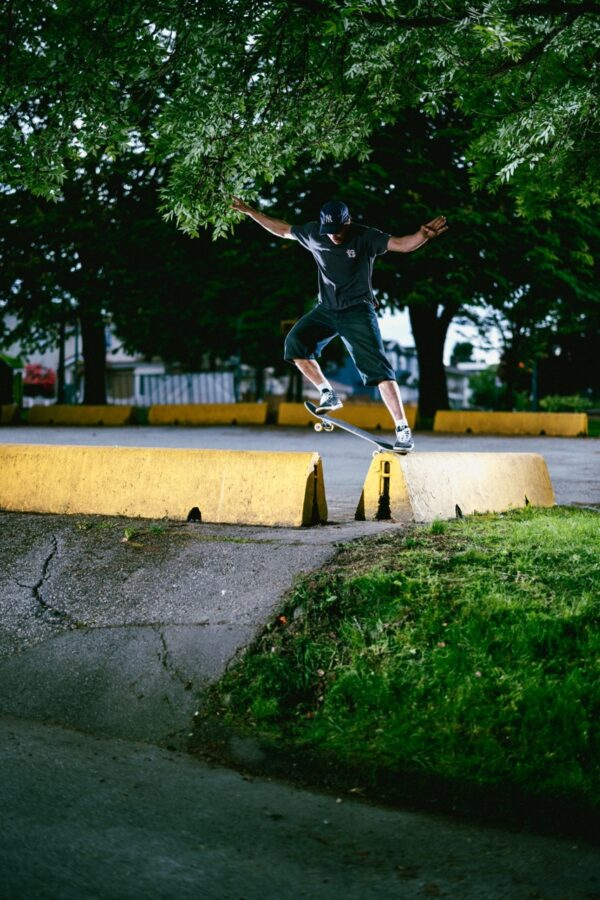
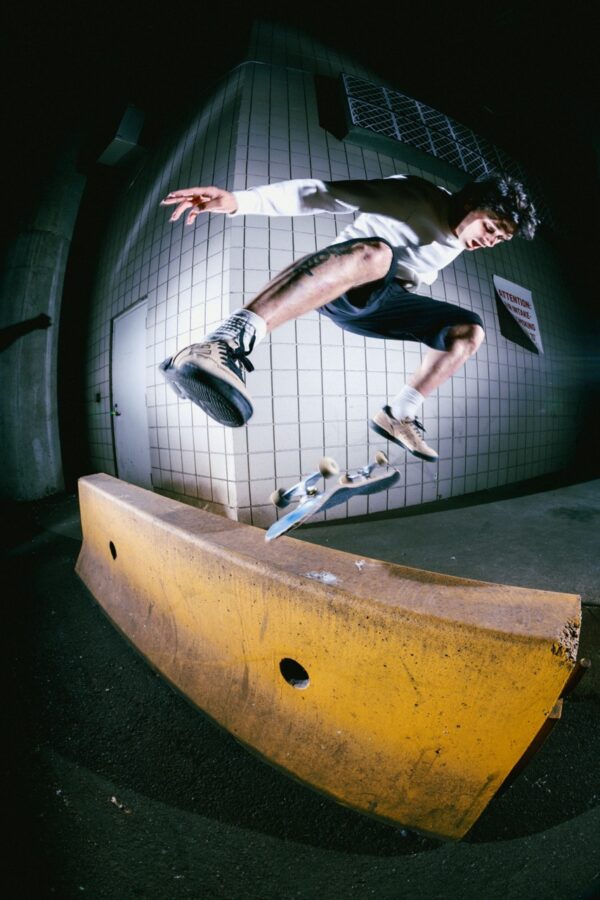
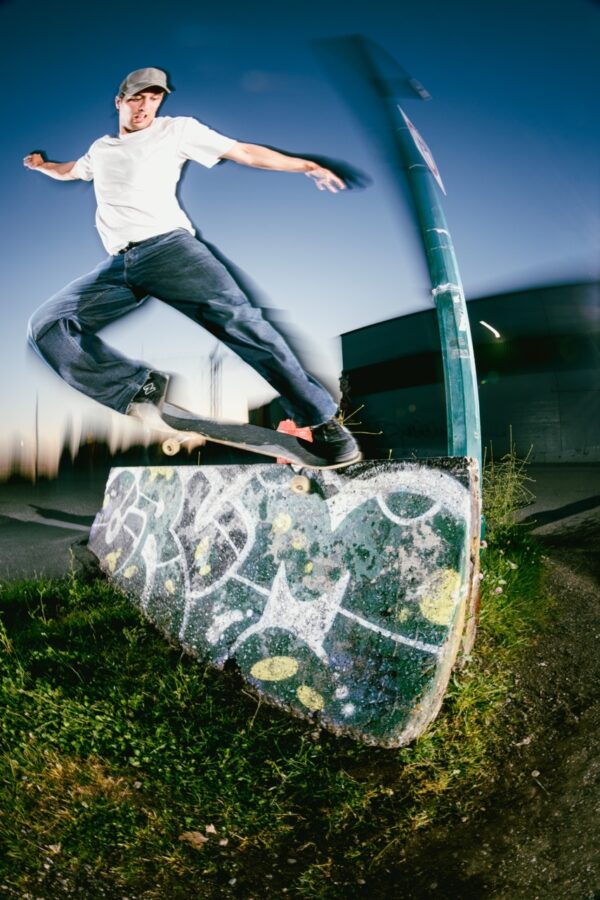
That is, of course, the barrier. Depending on where you live, you may know it as a Jersey barrier or k-rail. If you live in Western Canada, you’re familiar with the knee-high, round-topped triangular class. This is one of the only obstacle archetypes that can be slid, grinded, aired in, leaped over, and wallied. Can one perform a manual on a barrier? Sure, why not?
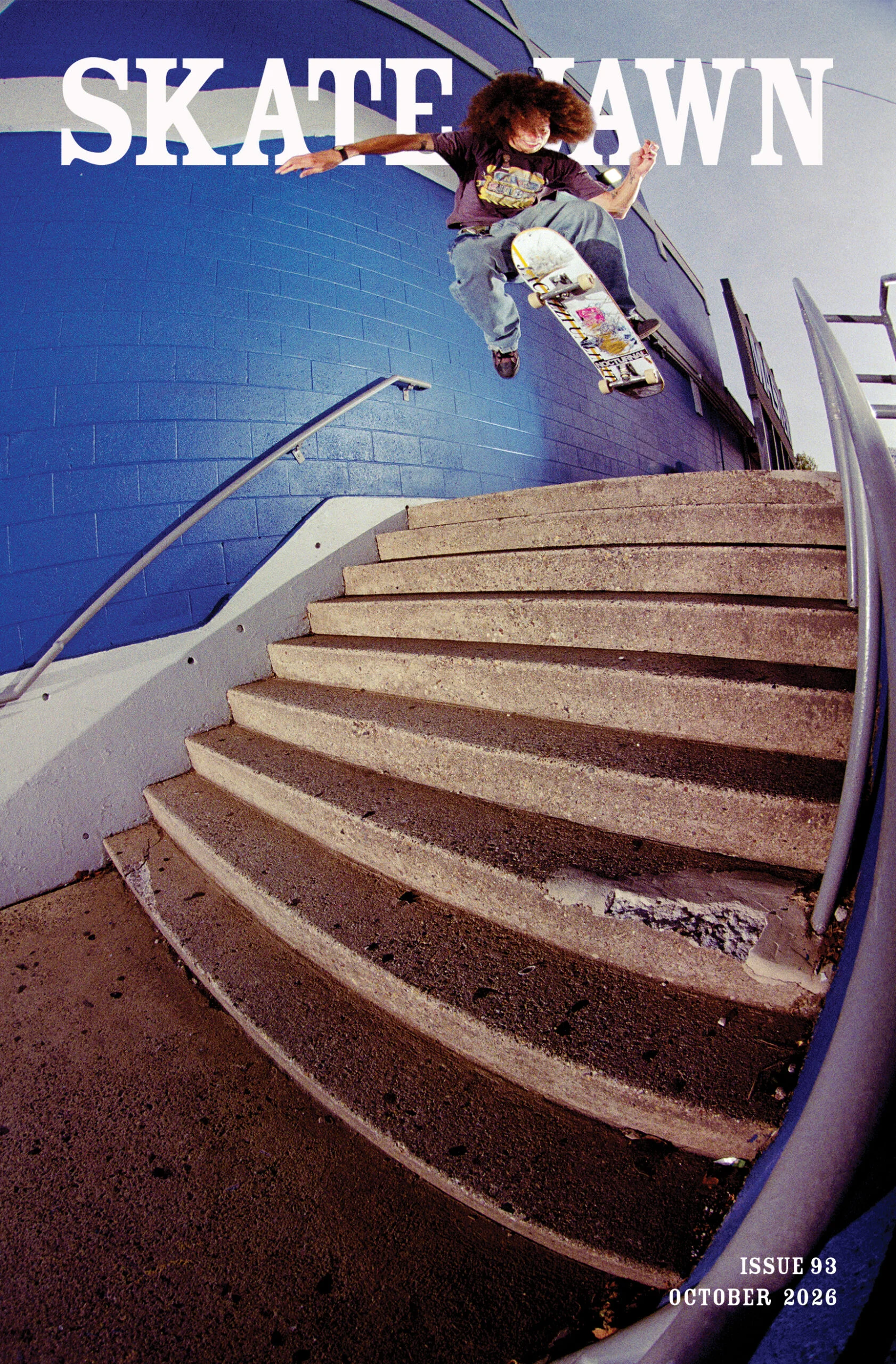
Anchoring these words are photographs of River Tavis, who is one very talented person skating one type of obstacle in multiple ways, leading one to ask, what else in skateboarding can be used with such versatility? The multi-tool with the axle rethreader is a close second, but even Tavis agrees, saying, “I think it’s gotta be, you can do anything on a barrier that you can do on a handrail or [over] a set of stairs, and then on top of that, they have a transition element to them.”
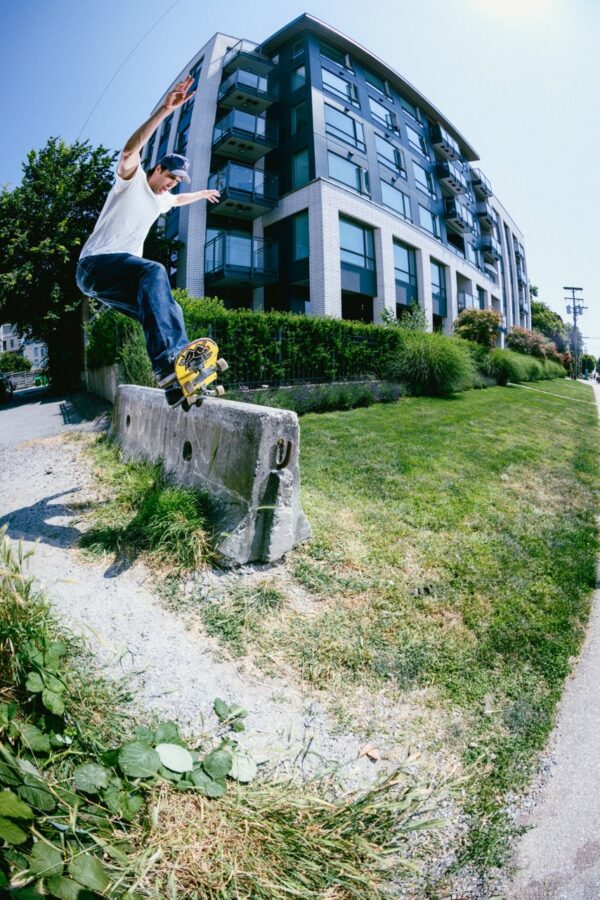
There is also something freeing about the familiarity of the barrier. “I like skating them because even though the spots are so different, you always know that a barrier is gonna skate like a barrier,” Tavis says.
These photos are part of a project that emerged naturally from that understanding. “For a while this summer, I was having a dry spell on getting clips unless it was at a barrier spot [laughs].” From there, he and photographer Carter Spinks made a conscious effort to search them out across British Columbia’s Lower Mainland, in whatever regional iteration they came in. “I love that the smaller triangle-shaped barriers are unique to Canada… that makes skating them feel especially Canadian.” Says Tavis.
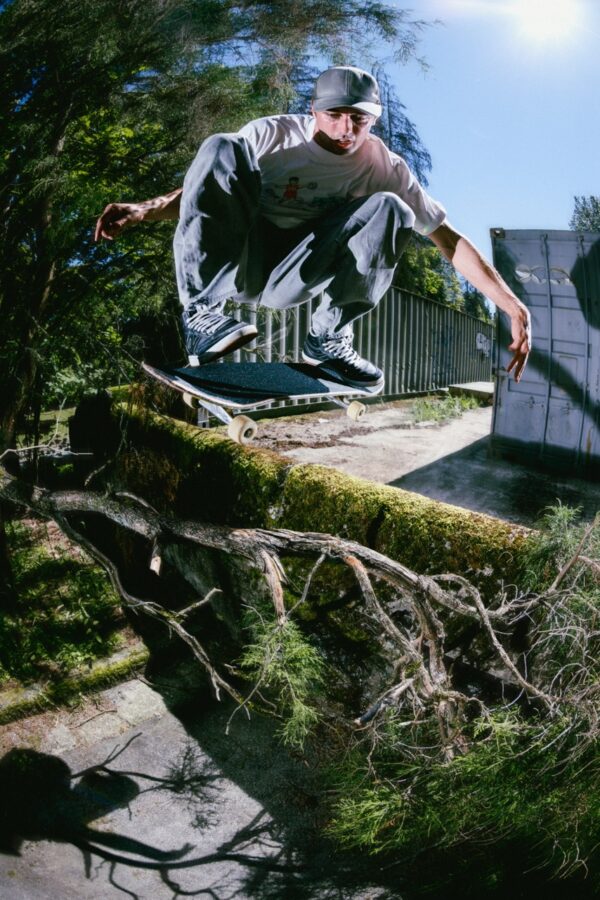
If that wasn’t enough ascribed meaning, look at it from another angle, and skateboarding on or over a barrier becomes a form of protest or agitation. This formed concrete obstacle has an express purpose: the cessation of movement. Yet, here is Tavis, moving all over them. A defiant, alternative future borne from the act of skateboarding.
There may be a lesson or inspirational analogy buried within that worthy of expounding upon. You know, something, something, the transgressive nature of skateboarding, something, something. Or, also likely, it’s a pointless, overanalysis of the banal. Which is fitting, given that’s more or less skateboarding in the abstract. What is the objective purpose of flying down stairs, grinding a handrail, or running straight into a barrier to see what happens?
Nothing. It takes a dedicated skateboarder or keen observer to appreciate anything beyond this senselessness of movement. Admittedly, at times, the shared, almost spiritual interpretation of skateboarding — the idea that riding this toy around offers anything more than cathartic pockets of physical exercise and an excuse to hang out with friends — is difficult to reconcile in our current moment. It brings to mind the writer and art critic Ben Davis, who attempted to frame the purpose of art amidst the grueling twin pressures of capitalism and ascendant fascism in his book Art in the After Culture.
“What art might offer is always modest on its own, and, from one angle, art has never looked smaller. But from another angle, in the right conditions, it might offer something close to an actual survival skill.”
Maybe that’s all skateboarding is: a way to keep moving forward.